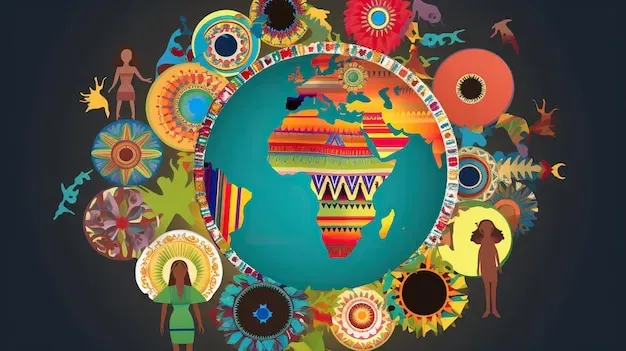
Global Cultures influence how we think, speak, and collaborate across borders, turning diversity from a hurdle into a strategic asset. In our interconnected world, mastering intercultural communication helps people listen with curiosity, ask clarifying questions, and share ideas with clarity. This introductory guide invites readers to explore shared practices, beliefs, and rituals without relying on stereotypes, while showing how context, history, and personal experience shape interactions. By cultivating the ability to recognize, interpret, and adapt to unfamiliar settings, you can navigate cross-cultural conversations with confidence and respect. The result is richer collaboration, smarter teamwork, and more meaningful connections in business, travel, and everyday life as you apply practical steps for respectful engagement.
Global Cultures and Intercultural Communication: Building Bridges for Global Collaboration
In our increasingly interconnected world, Global Cultures drive how we think, communicate, and collaborate. This section explores how intercultural communication—listening first, seeking clarity, and adapting messages—turns cultural differences from friction into fuel for innovation. By recognizing global cultures and practicing intercultural communication, teams can unlock more effective global collaboration.
To apply these ideas, start by mapping cultural foundations such as values, time orientation, and communication styles. Use plain language, check for understanding, and invite feedback to align interpretations. Be mindful of nonverbal cues and context, avoid stereotyping, and cultivate cultural intelligence by studying regions, engaging with diverse teams, and reflecting on outcomes.
Cultural Etiquette and Cultural Intelligence for Effective Global Collaboration
Etiquette reflects a culture’s values in social interactions and business protocols. Doing homework on greeting styles, dining manners, and dress codes signals respect and trust. Observing hosts and adjusting to local norms while staying true to your own values helps you build rapport in multinational teams, supplier relationships, and online communities.
Developing Cultural Intelligence (CQ) is a practical, repeatable process. Build a learning routine, seek real-world exposure through cross-border projects, reflect after interactions, and leverage mentors who bring cross-cultural experience. As CQ grows, you’ll improve how you communicate, negotiate, and collaborate—boosting global collaboration and ensuring inclusive, effective outcomes across diverse contexts.
Frequently Asked Questions
What is Global Cultures, and why is intercultural communication essential in a globally connected world?
Global Cultures refer to the shared practices, beliefs, and rituals people bring to a global setting beyond national labels. Intercultural communication is a practical skill that helps you listen with curiosity, confirm understanding, and adapt your message to diverse audiences, boosting global collaboration and reducing miscommunication in multinational teams and online communities.
How do cultural etiquette and cultural intelligence support effective collaboration across regions?
Cultural etiquette reflects a culture’s values in social and business interactions; understanding it helps you show respect and build trust in global collaboration. Cultural intelligence (CQ)—encompassing motivation, knowledge, strategy, and behavior—enables you to plan, adapt, and respond in cross-cultural contexts. By developing CQ and following etiquette guidelines, you can navigate meetings, negotiations, and daily interactions more smoothly, improving outcomes in global teams, suppliers, and online communities.
| Key Point | Summary | Notes / Examples |
|---|---|---|
| Global Cultures: drivers of thought, communication, and collaboration | In our interconnected world, culture guides how we think, communicate, and work with others. | From the Introduction. |
| Global Cultures concept | Beyond labels, Global Cultures encompass shared practices, beliefs, and rituals across a global setting. | Definition |
| Practical goal of the guide | Provide a practical framework to understand diverse contexts with empathy for personal interactions, international business, travel, and online communities. | Purpose of the guide |
| Core ideas | Recognize foundations without stereotyping; approach with curiosity; adapt etiquette while honoring personal values. | Key mindsets |
| Real-world application | Provide a framework for real situations—multinational teams, suppliers abroad, and daily life. | Outcome orientation |
| Foundations components | Foundations include language, history, religion, social norms, and everyday practices; values, authority, time, and communication shape behavior. | Foundational elements |
| Time orientation | Time attitudes influence workplace norms, timelines, and consumer expectations. | Time and planning |
| Communication & etiquette | Directness, context, nonverbal cues affect message reception; etiquette signals respect. | Communication style |
| Beyond simplistic labels | Move past Western/Eastern labels; use cultural dimensions; acknowledge within-culture variation. | Avoid stereotyping |
| Intercultural communication practice | Listen first, confirm understanding, and adapt messages. | Core practice |
| Do’s and Don’ts | Listen with curiosity, adapt language, seek feedback, observe nonverbal cues; avoid assumptions. | Best practices |
| Cultural Intelligence CQ | CQ has four components: motivation, knowledge, strategy, and behavior; develop through deliberate practice. | CQ framework |
| Applications | Apply in business and daily life; adapt decision-making and negotiation styles; balance efficiency with relationships. | Contextual impact |
| Frameworks for thinking | Cultural dimensions and high-context vs low-context as diagnostic tools. | Analytical tools |
| Case study | Multinational team resolved miscommunication via cross-cultural check-ins, restoring trust and accelerating delivery. | Illustrative example |
| Practice prompts | Plan learning moments, practice cross-cultural conversations, reflect, and build a CQ toolkit. | Actionable steps |
Summary
Global Cultures are living, interconnected systems that shape how people think, communicate, and collaborate across borders. A deeper understanding of Global Cultures through intercultural communication, etiquette, and cultural intelligence helps individuals navigate multinational teams, travel, and online communities with empathy and effectiveness. By recognizing foundations, adapting language, and respecting diverse norms while staying true to your own values, you turn cultural differences into opportunities for learning, innovation, and stronger relationships. In today’s globally connected landscape, embracing Global Cultures is a strategic advantage that enhances teamwork, inclusion, and shared understanding across diverse contexts.